
Indian Oil Corporation (IOC), the nation's largest oil firm, on Friday said ample stocks of petrol, diesel and cooking gas LPG are available in the country and there is no need for panic buying of fuel. The statement comes after social media was flooded with posts and videos showing people queuing at petrol pumps to stock fuel as tensions between India and Pakistan escalated.
China and Pakistan are in a tight strategic alliance. India must deal with them one at a time, but be prepared in case they decide to collude, points out Shekhar Gupta.
Officials have also written to the Pakistan side regarding the medicines, an official statement said.
'Right now, we have no relationship with Pakistan. And the relationship with China is not great.'

Following the precision strikes, India reached out to several world capitals and briefed senior officials about its anti-terror actions against Pakistan.

The Indian Army responded in a measured and effective manner to the provocation.

From the 30-share Sensex firms, Tata Motors, Bajaj Finance, Eternal, Adani Ports, Tata Steel, Titan, Mahindra & Mahindra and Power Grid were among the gainers. Asian Paints, Sun Pharma, ITC, Nestle, Reliance Industries and HCL Tech were among the laggards.

India has strongly rejected Pakistan's claims on Kashmir, calling it a Union Territory and dismissing the Pakistan Army Chief's statement about it being the country's "jugular vein." India also rejected Pakistan's claim that Tahawwur Rana, a Mumbai terror attack accused, is a Canadian citizen and that it has nothing to do with him. India's External Affairs Ministry spokesperson stated that Pakistan's reputation as the "epicentre" of global terrorism will not diminish. Rana's extradition is a reminder that Pakistan needs to bring other perpetrators of the Mumbai terror attacks to justice, according to India.

The highlight of Tuesday's debate on Operation Sindoor was the speech by Prime Minister Narendra Modi, with the rebuttal by Congress's Wayanad MP Priyanka Gandhi coming a close second.

The Indian government has dismissed claims of a suicide attack on an Army brigade in Jammu and Kashmir and a drone attack in Punjab as "fake news." The Press Information Bureau's Fact Check Unit found the claims to be false and attributed the spread of disinformation to coordinated efforts by certain social media handles and mainstream media in Pakistan. The government urged citizens to rely on verified sources and refrain from sharing unverified content.

Opposition parties have agreed to the agenda of taking up a special discussion on the Pahalgam terror attack and Operation Sindoor on Monday in Lok Sabha and the next day in Rajya Sabha, brightening up the prospect of normalcy returning to Parliament after the virtual washout of first-week proceedings.

Singh said New Delhi has "redesigned and redefined" its strategy and response to terrorism and that possible dialogue with Islamabad will be only on terrorism and PoK.

Prime Minister Narendra Modi cut short his two-day visit to Saudi Arabia and returned to New Delhi on Tuesday night following a deadly terrorist attack in Jammu and Kashmir. Modi, who held bilateral talks with Saudi Crown Prince Mohammed bin Salman in Jeddah, skipped an official dinner hosted on Tuesday to address the crisis. He was originally scheduled to return to India on Wednesday night. The attack, claimed by The Resistance Front (TRF), a proxy of the Pakistan-based Lashkar-e-Taiba (LeT) terrorist group, prompted an urgent internal meeting at the Ritz Carlton hotel in Jeddah, attended by Modi, National Security Adviser Ajit Doval, and other senior officials.
The Indian government has blocked 16 Pakistani YouTube channels for allegedly disseminating provocative and communally sensitive content as well as false and misleading narratives against India, its Army and security agencies. The decision was taken following recommendations from the Ministry of Home Affairs in the wake of the April 22 terror attack at Jammu and Kashmir's Pahalgam in which 26 people, mostly tourists, were killed.

The Indian Air Force conducted precision strikes on terror hideouts in Pakistan, targeting a Jaish-e-Mohammad communication network housed in a primary health centre in Tehra Kalan village. The communication setup was essential for planning and coordinating activities with infiltrated terrorists in Jammu and Kashmir. The strikes aim to dismantle the communication network and hinder the terrorists' ability to operate.

A soldier was killed in an encounter with terrorists during a cordon and search operation launched by security forces in Jammu and Kashmir's Kishtwar district. The gunfight took place when the security forces were conducting a search operation following a tip-off about the presence of terrorists in the Shingpora area of Chhatru. Four terrorists are said to be trapped in the area.

It is considered one of the most crucial appointments within the Indian Army, according to an official statement from the Ministry of Defence.
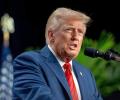
Trump said that leaders in India and Pakistan are "great leaders" and "they understood, and they agreed, and that all stopped".
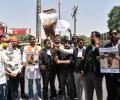
Kash Patel pledged full support to India, calling the act a reminder of the constant threats that the world faces from the evil of terrorism.
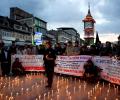
'A terrorist has no religion -- they are nothing but the face of evil. When you offer namaz for a terrorist, attend their funeral, or give them a grave, you affirm that they belong to a religion. That must stop'
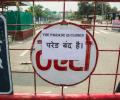
Pakistan's Foreign Minister Ishaq Dar has called for a 'composite dialogue' with India to address the contentious issues between the two sides.
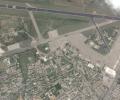
India's strikes on Pakistan damaged runways and structures across at least six airfields, according to a visual analysis by The Washington Post, which experts said were the most significant attacks of their kind in decades of simmering conflict between the two nations.

Various parts of Surat were flooded after incessant rainfall in the region. Over 100 mm of rain has blocked roads and led to waterlogging in several low-lying areas.
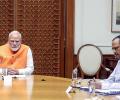
India's National Security Advisor Ajit Doval briefed US Secretary of State Marco Rubio on the country's missile strikes against nine terrorist targets in Pakistan. The strikes, dubbed "Operation Sindoor," targeted terrorist infrastructure in Pakistan and Pakistan-occupied Jammu and Kashmir. India stated that the strikes were measured, responsible, and non-escalatory in nature, targeting only known terror camps. The strikes followed a deadly attack on civilians in Jammu and Kashmir on April 22, for which India has accused Pakistan-based terrorists. The Indian government has cited credible leads, technical inputs, and survivor testimony as evidence of Pakistan's involvement in the attack.
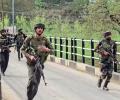
"More than 85,000 domiciles have been issued to non-locals, creating a pathway for demographic change in Jammu & Kashmir. These non-locals arrive posing as tourists, obtain domiciles, and then begin to act as if they own the land. Consequently, violence will be directed toward those attempting to settle illegally," TRF said in a statement which could not be independently verified by Rediff.

"India has consistently maintained a firm and uncompromising stance against terrorism in all its forms and manifestations. It will continue to do so," he said.
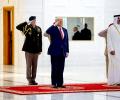
'He is intrigued by the intractability of Kashmir issue. With his interest in dealmaking and peacebrokering, he sees it as an exciting challenge to tackle.'
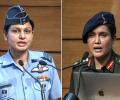
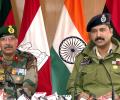
India conducted precision strikes on nine terror targets in Pakistan and Pakistan-Occupied Kashmir, targeting terrorist infrastructure to deter further attacks. The operation, codenamed 'Operation Sindoor', was detailed by two women military officers, Col Sofiya Qureshi and Wing Commander Vyomika Singh, at a press briefing in New Delhi. The officers highlighted the precise nature of the strikes, emphasizing the use of "niche technology weapons" to ensure no collateral damage. The briefing showcased India's military prowess and the growing role of women in the armed forces.
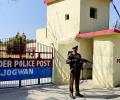
The armies of India and Pakistan on Thursday held a brigade commander-level flag meeting along the Line of Control (LoC) in Jammu and Kashmir's Poonch district to discuss issues related to border management.

Amid a storm surrounding his collaboration with Pakistani actress Hania Aamir, singer-actor Diljit Dosanjh has taken to social media with a cryptic message.

On Wednesday, April 9, 2025, the Indian Army's Chinar Warriors and the Jammu and Kashmir police recovered and destroyed an IED on the Wadder-Haphruda road at Haphruda village in Kupwara, north Kashmir.
India on Thursday night swiftly foiled Pakistan's attempts to hit various key Indian installations including military stations at Jammu, Pathankot and Udhampur with drones and missiles, the defence ministry said.
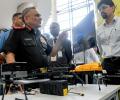
Chief of Defence Staff General Anil Chauhan emphasizes the importance of self-reliance in Unmanned Aerial Vehicles (UAVs) and Counter-Unmanned Aerial Systems (C-UAS) for India, citing recent global conflicts and Operation Sindoor as examples of their strategic importance.

Trump has repeatedly claimed that he "helped settle" the tensions between India and Pakistan and that he told the nuclear-armed South Asian neighbours that America would do a "lot of trade" with them if they stopped the conflict.

'Pakistan's only concern has been while they were on the FATF watch list was to distance their State institutions and organs from any direct connection with the actual execution of militancy inside Kashmir.'
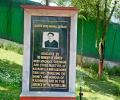
Shaheed Maqbool Sherwani changed the course of Indian history forever, but himself lies forgotten in the town he saved.

INDIA bloc parties are set to raise issues such as the Pahalgam attack, US President Trump's claims of brokering a ceasefire, and concerns over electoral roll revisions in Bihar during the Parliament's Monsoon session.
US Secretary of State Marco Rubio on Thursday spoke separately with External Affairs Minister S Jaishankar and Pakistani Prime Minister Muhammad Shehbaz Sharif, emphasising the need for de-escalation and reiterated his calls for Pakistan to take concrete steps to end any support for terrorist groups.
The Indian Air Force on Sunday said it has successfully executed its assigned tasks with precision and in line with national objectives during Operation Sindoor.
India carried out missile strikes on terror targets in Pakistan and Pakistan-Occupied Kashmir, including the Jaish-e-Mohammad stronghold of Bahawalpur and Lashkar-e-Taiba's base in Muridke, after the Pahalgam attack that killed 26 civilians. The Foreign Secretary said the actions were measured, non-escalatory, proportionate and responsible.
